
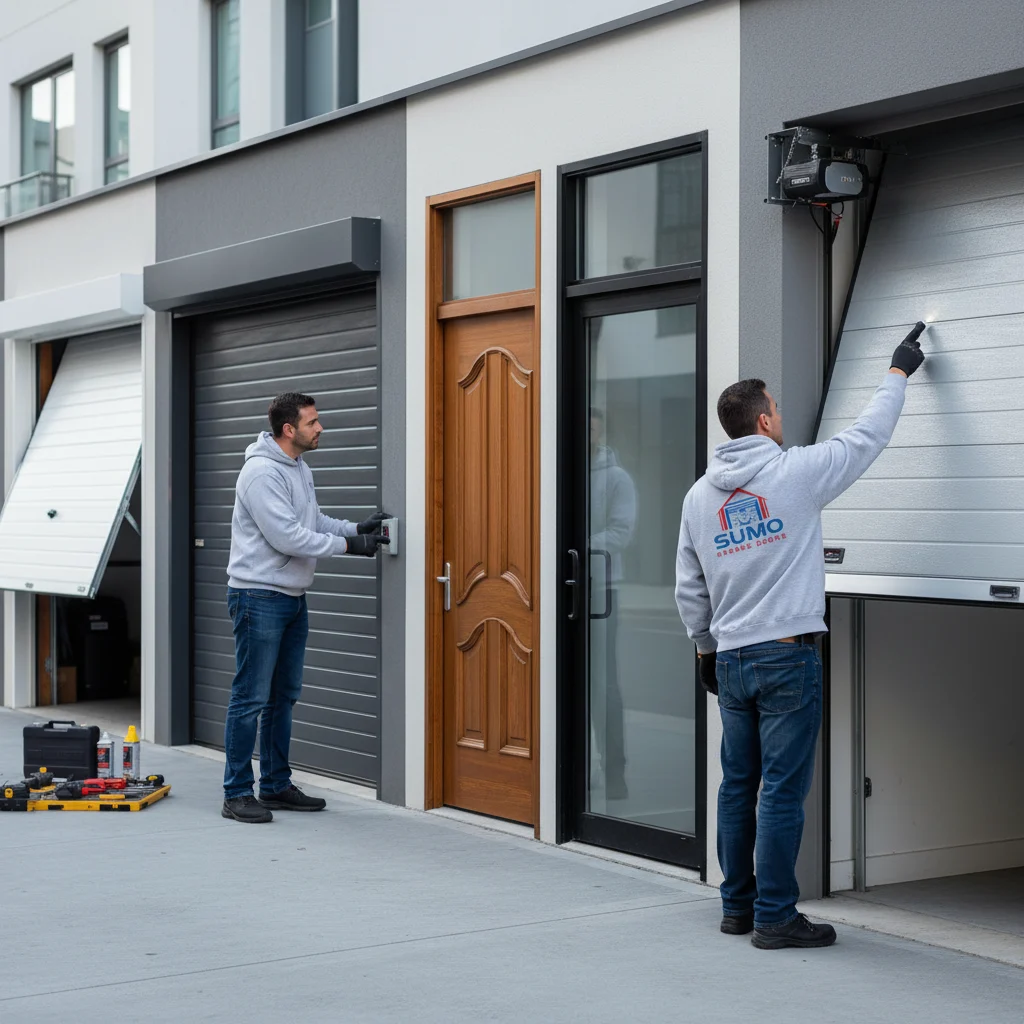
A garage door that suddenly becomes noisy, crooked, slow, or difficult to open does not always need to be replaced. A broken spring, worn roller, damaged cable, opener problem, or isolated panel issue can often be repaired while the rest of the system remains usable.
The decision to repair vs replace garage door hardware should come down to the condition of the complete door, not one symptom. Repair usually makes sense when the problem is limited to a serviceable component. Replacement becomes worth considering when damage affects several parts, the door has repeated failures, panels are structurally compromised, or you are spending more money to maintain a system that no longer fits your home.
Repair vs Replace Garage Door: What Is the Quick Answer?
Repair the garage door when the door itself remains in good condition, and one or two components are causing the problem.
That can include broken springs, worn rollers, damaged cables, track alignment problems, opener faults, loose hardware, or an isolated damaged panel.
Replace the garage door when the door has widespread structural damage, several damaged panels, recurring mechanical problems, extensive corrosion, or a design that no longer meets your insulation, security, or appearance needs.
Age matters, but age should not make the decision by itself.
An older garage door that operates smoothly and has repairable hardware may continue to serve the home. A newer door with severe impact damage can need replacement much sooner.
A Broken Garage Door Spring Usually Calls for Repair, Not a New Door
A broken spring can make the garage door feel as if the entire system has failed.
The door may become too heavy to lift normally, stop opening with the automatic opener, or sit unevenly.
That does not mean the door panels need replacement.
Springs are wear components. DASMA, the Door & Access Systems Manufacturers Association, states that garage door springs wear out and should be professionally inspected and replaced when needed. It also warns homeowners about the high tension involved in spring systems.
If the panels, track, frame, and other major components remain in usable condition, spring replacement may restore normal operation.
A spring failure becomes part of the replacement discussion when it happens alongside extensive door deterioration or several other expensive problems.
Worn Rollers, Cables, and Tracks Often Make Garage Door Repair Practical
A garage door depends on several moving parts working together.
Rollers move through the tracks. Cables work with the spring system to lift and lower the door. Hinges connect the sections. Tracks guide the door through its travel.
Problems with these parts can make the door noisy, jerky, uneven, or difficult to operate.
DASMA advises homeowners to have frayed or worn cables replaced by trained technicians because of the forces involved in the spring system. The organization also notes that a door that does not move smoothly can indicate an unsafe or unbalanced condition that needs professional attention.
When the issue is limited to one of these components, garage door troubleshooting can identify the cause before a complete replacement is considered.
Replacing a full door because of worn rollers or a misaligned track can add an expense that a repair could have avoided.
One Damaged Garage Door Panel May Not Require Full Replacement
A dented or damaged panel creates a harder decision.
If only one section is affected and a compatible replacement panel is available, repairing or replacing that section can preserve the rest of the door.
The condition around the damaged area matters.
A small dent that does not interfere with movement is different from a panel that has split, bent enough to affect the hinges, or caused the door to move unevenly in the tracks.
Multiple damaged sections change the calculation again.
By the time several panels need replacement, the cost and condition of the remaining system should be compared with installing a complete new door.
Matching is another concern with older doors. A replacement panel may not be available in the same design, construction, or finish years after the original installation.
Severe Impact Damage Can Make Garage Door Replacement the Better Choice
A vehicle hitting a garage door can affect much more than the visible dent.
Panels can bend, tracks can shift, rollers can leave the track, hinges can move, and the door opening can become misaligned.
Trying to force a heavily damaged door through another opening cycle can make the situation worse.
A professional inspection should look at the complete system before deciding whether repair remains practical.
If damage is limited to a replaceable panel or section of track, repair may still make sense.
If several panels, tracks, attachment points, and supporting components have been affected, replacement can give you a better result than rebuilding a damaged system one component at a time.
Repeated Garage Door Repairs Can Change the Cost Decision
One repair does not mean a garage door has reached the end of its useful life.
Repeated repairs deserve more attention.
Suppose you replaced a spring last year, repaired the opener several months later, and now have failing panels or tracks. Each repair may be reasonable by itself, but together they can show that several parts of the system are aging at the same time.
Keep records of garage door repairs.
When another problem develops, add what you have already spent and ask what other components are likely to need attention.
This gives you a better financial comparison than looking only at today’s repair bill.
The decision is not simply about whether a technician can repair the door. It is whether paying for that repair provides enough remaining value.
Garage Door Age Matters More When Other Problems Are Developing
Homeowners often ask for a specific age when replacement becomes mandatory.
There is no universal age at which every garage door needs to be removed.
Usage, construction, material, weather exposure, installation quality, maintenance, and previous repairs all affect condition.
DASMA recommends regular homeowner safety checks and an annual visit from a trained door technician because parts wear over time even while the door remains in daily operation.
Age becomes more useful as a decision factor when combined with other conditions.
An older door with rust, panel deterioration, noisy operation, recurring repairs, and an outdated opener presents a different case from an older door that remains balanced and reliable.
Garage Door Opener Problems Do Not Automatically Mean Door Replacement
The garage door and garage door opener are connected, but they are not the same system.
An opener can fail while the door itself remains usable.
Electrical faults, worn opener components, remote problems, sensors, or an aging motor can interfere with automatic operation.
Before replacing the door, disconnect the opener only according to the manufacturer’s instructions and have the door’s manual operation assessed.
A properly balanced door should move smoothly without depending on the opener to compensate for a spring or mechanical problem.
Federal safety rules also matter for residential automatic garage door openers. The U.S. Consumer Product Safety Commission states that automatic residential garage door operators are subject to a mandatory federal safety standard covering entrapment protection.
An outdated opener can therefore be a reason to discuss an opener upgrade without automatically replacing usable door panels.
Failed Safety Sensors Need Attention Before Normal Garage Door Use Continues
Automatic garage door systems use safety features intended to reduce entrapment risk.
If a door closes and fails to reverse as required, ignores an obstruction, or has sensors that no longer respond correctly, the problem should be addressed rather than treated as an inconvenience.
CPSC explains that federal requirements for residential automatic garage door openers include entrapment-protection provisions.
Sometimes the correction involves the opener or sensor system.
Replacement of the physical garage door is only necessary when the door itself also has problems that justify it.
This is another example of why diagnosis needs to separate the door, counterbalance system, opener, and safety controls.
Poor Insulation Can Make New Garage Doors Worth Considering
A garage door can still open and close while no longer fitting the needs of the home.
This can happen when an older uninsulated door separates the garage from conditioned areas or living space above.
Replacing the door allows you to reconsider insulation, weather seals, construction, windows, and other features at the same time.
However, homeowners should avoid assuming that one new garage door will produce a guaranteed percentage reduction in energy bills.
Heating and cooling costs depend on the complete building, including walls, ceilings, air leakage, HVAC equipment, garage use, and climate.
Treat insulation as one factor in the replacement decision, not a guaranteed payback calculation.
Appearance Can Be a Valid Reason to Replace a Working Garage Door
Not every replacement begins with mechanical failure.
The garage door can occupy a large part of the home’s front exterior. Faded panels, old window designs, corrosion, or a style that conflicts with other exterior renovations may lead a homeowner to consider replacement even while the door still functions.
In that situation, the decision is not repair versus emergency replacement.
It is whether investing in the existing door still makes sense when you already want to change its appearance or construction.
Review new garage doors before paying for major cosmetic work on an older door. A replacement can address appearance, hardware, seals, and other aging components in one project.
Never Judge Garage Door Safety Only by Whether the Opener Still Moves It
An automatic opener can sometimes move a door that has another mechanical problem.
That does not mean the system is in good condition.
DASMA warns that springs, cables, brackets, and other garage door components can be under high tension and recommends professional service for those parts. It also advises trained technicians to install garage doors because of the safety risks involved.
A door that becomes heavy, falls, moves unevenly, leaves the tracks, or develops damaged spring or cable components should not be repeatedly cycled just because the opener can still move it.
Have the problem inspected before deciding whether the correct answer is repair or replacement.
Compare the Complete Garage Door Before Spending on Another Repair
The best repair vs replace garage door decision comes from looking at more than the failed part. A broken spring or worn roller can make repair the clear choice when the rest of the system is sound. Multiple damaged panels, recurring breakdowns, structural damage, or several aging components can make replacement a better use of the budget.
Sumo Doors provides garage door repair, replacement, installation, spring repair, cable and roller work, track service, opener repair and installation, panel service, troubleshooting, and maintenance throughout Long Island, including Nassau and Suffolk Counties. Its current service information states that technicians inspect the complete system before recommending repairs, while new-door installation is available when replacement makes more sense. If you are still trying to decide whether to repair or replace your garage door, contact Sumo Doors for an assessment before paying for another repair that may not solve the larger problem.

