
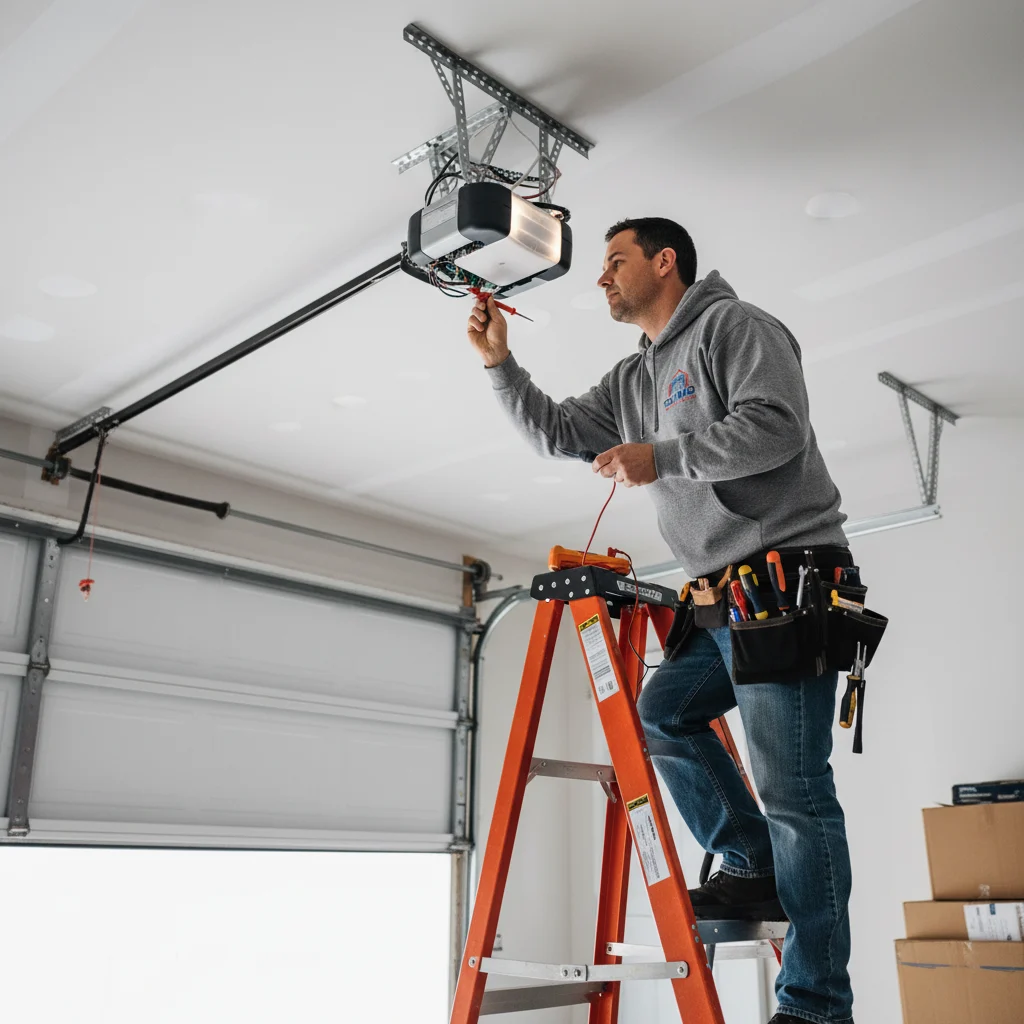
The door wakes the baby at seven in the morning, and the neighbor mentioned it twice last month. What sounds like an annoyance is usually the door telling you which part gave up first. Most homeowners booking garage door repair in Long Island call about noise, and the sound itself points straight to the component behind it.
Matching the Sound Your Door Makes to the Part Causing It
Every noise comes from a specific place in the system. Standing inside the garage while somebody operates the door tells you more in thirty seconds than an hour of guessing.
Use this as a starting map:
- Grinding or scraping: worn rollers, dry bearings, or debris in the tracks
- Squealing or screeching: dry hinges, springs, or rollers needing lubricant
- Rattling or vibrating: loose bolts, brackets, or track hardware
- A single loud bang: a snapped torsion spring
- Humming or buzzing with no movement: opener capacitor or motor trouble
- Slapping or clunking: a loose chain or a worn trolley
- Rubbing or dragging: bent tracks or a door out of alignment
- Popping during travel: hinges wearing at the panel joints
A typical residential door in good condition runs around 55 to 65 decibels. Once it climbs past 75, something has worn. The NIH notes that sounds at or below 70 A-weighted decibels are unlikely to damage hearing, while repeated exposure at or above 85 can, according to its guidance on noise-induced hearing loss. A garage door reaching that range with a bedroom above it becomes more than a comfort problem.
Grinding and Scraping Caused by Worn Rollers
Rollers carry the door along the track, and they take more wear than any other moving part. Most builder-grade homes across Nassau and Suffolk counties come with plastic rollers that hold up for five to seven years.
When the bearings inside give out, the roller stops rolling and starts sliding. That sliding produces the grinding sound most homeowners describe, and it grows louder as the flat spot on the roller widens.
Check the rollers with the door closed. Bearings should spin with light finger pressure. Rollers that wobble in the stem, sit loose in the track, or show worn flat sections need replacing. Steel rollers with sealed ball bearings last longer than nylon, though nylon runs quieter, which matters when the garage sits under a bedroom.
Debris causes the same sound without any part failing. Sand, road salt, small stones, and dried leaves collect in the horizontal tracks and grind under every pass. Wiping the tracks with a damp cloth twice a year removes the problem at no cost.
Squealing and Screeching From Dry Hinges and Springs
This is the sound most people notice first, and it usually has the simplest fix.
Metal parts rubbing against metal without lubricant produce a high-pitched squeal that carries through the whole house. Hinges at the panel joints, roller stems, spring coils, and the bearing plates all need lubricant to stay quiet.
Lubrication has rules worth following:
- Use a garage door lubricant made for the purpose, either silicone or lithium-based
- Apply to hinges, roller bearings, springs, bearing plates, and the lock mechanism
- Wipe the tracks clean instead of greasing them, since lubricant in the track collects dirt
- Skip household oils and general purpose sprays, which thin out and attract grime
- Repeat every six months, and before winter in particular
A door left dry for years develops rust inside the hinge knuckles, and lubricant alone no longer silences it. At that point the hinges need replacing, which costs far less than waiting for one to crack and let a panel shift out of line.
Rattling and Vibrating From Loose Hardware
A garage door goes through roughly 1,500 cycles a year in a household with two drivers. Every cycle vibrates the entire assembly, and bolts back themselves out over time.
Rattling comes from several places. Track brackets loosen where they fasten to the wall framing. Hinge screws back out of the panel. The opener rail loosens at the header bracket. Nuts on the roller carriers work free.
Run a check with the door closed and the opener unplugged. Tighten every visible bolt and lag screw with a socket wrench, working from the bottom bracket upward. Stop short of overtightening, since stripped holes in the panel create a bigger repair.
One bracket needs to be left alone. The bottom brackets at each side of the door hold the lift cables under spring tension, and loosening them releases that tension without warning. Those stay with a technician.
A Single Loud Bang Followed by a Door That Will Not Lift
This sound frightens people, and it should. A torsion spring failing sounds like a gunshot inside the garage, and homeowners often report it as a break-in or a car hitting the house.
Springs carry the entire weight of the door, which runs 150 to 400 pounds on most residential models. They last around 10,000 cycles, which works out to seven to ten years of normal use. When one breaks, the door becomes too heavy for the opener, and the motor strains or refuses to lift at all.
Watch for these situations after the bang:
- A visible gap in the spring coil above the door
- The door lifting a few inches then stopping
- The opener straining with a loud hum before it reverses
- The door dropping fast when released from the opener
- One side of the door sitting lower than the other
Spring work stays with trained technicians, since the tension stored in a wound spring causes serious injury when released without the correct bars and technique. Professional garage door spring repair also covers rebalancing, because replacing a spring without setting the correct tension leaves the door heavy and the opener working past its limit.
Humming, Buzzing, and Straining From the Opener Unit
Noise coming from the motor housing rather than the door points at the opener itself.
A humming sound with no door movement usually means a failed capacitor. The motor tries to start and cannot generate the torque to turn. This part costs little and replaces quickly, though the same sound appears when a broken spring leaves the door too heavy.
Grinding from inside the housing on a chain drive unit points to a stripped nylon gear. The motor runs, the chain stays still, and the sound comes from teeth slipping. Gear kits restore the unit when the motor remains sound.
A straining sound during travel means the opener is lifting weight the springs should be carrying. Ignoring it burns out the motor within months. Booking garage door opener repair at the straining stage costs a fraction of replacing a burnt motor later.
Older units also grow louder as mounting hardware loosens. The motor housing hangs from the ceiling joists, and a loose mount turns the whole ceiling into a sounding board that carries noise into the room above.
Slapping and Clunking From a Loose Chain or Worn Trolley
Chain drive openers make a distinct slapping sound when the chain sags. The chain lifts off the rail during travel, then drops back with each cycle.
Most openers have an adjustment nut at the trolley end for tensioning. The chain should sit about a quarter inch above the base of the rail at its midpoint. Too tight wears the sprocket, and too loose causes the slap.
Clunking at the start and end of travel usually comes from the trolley or carriage. The plastic body wears where it engages the chain, and the door jerks as it takes up the slack. Replacement trolleys are inexpensive and quiet the door in under an hour.
Belt drive openers rarely make either sound, which is why homeowners with living space above the garage move to them during replacement.
Rubbing and Dragging From Bent or Misaligned Tracks
Tracks guide the door along a fixed path, and any deviation forces the rollers to fight it. The result is a rubbing sound, often paired with the door slowing at one point in its travel.
Tracks bend when a vehicle bumps them, when storage leans against them, or when brackets loosen and let the rail shift. The gap between the door and the track should stay consistent from bottom to top.
Look for these markers with the door closed:
- Shiny worn lines along the inside of the track
- A visible bow or kink in the vertical rail
- Rollers sitting tight against the track wall on one side
- Gaps between the track and the wall bracket
Small alignment corrections take a technician a short visit. Bent sections need replacement, since hammering a track back into shape leaves stress points that fail again.
How Long Island Weather Makes a Garage Door Louder Through the Year
Local conditions add wear that inland homes never face. Coastal communities from Long Beach through the Hamptons deal with salt-laden air that corrodes springs, hinges, rollers, and fasteners far faster than freshwater regions.
Salt corrosion produces rust on spring coils, which increases friction and shortens spring life. Hinges seize at the knuckle. Roller stems pit and bind. Doors within a mile of the water need lubrication three times a year rather than twice.
Winter brings a different problem. Metal contracts in cold weather, lubricant thickens, and the bottom seal freezes to the concrete. Doors sound louder in January because every moving part is tighter and stiffer. Homeowners often report a squeal that appears in December and disappears in April.
Humidity through Long Island summers swells wooden doors and wooden jambs, which increases drag along the stop molding. Steel and fiberglass doors avoid this, though the tracks still expand slightly and change clearance.
Why Some Openers Run Quieter Than Others
Drive type sets the baseline noise level before any part wears out, and this matters when choosing a replacement.
Chain drive units run loudest, typically 65 to 75 decibels, since a metal chain moves across a metal rail. They cost the least and last long, which makes them a sensible choice for detached garages.
Belt drive units run around 50 to 60 decibels, using a reinforced rubber belt instead of a chain. The difference is noticeable from a bedroom directly above the garage.
Screw drive units fall between the two and depend heavily on correct lubrication. Wall-mounted jackshaft openers mount beside the torsion bar rather than on the ceiling, which removes vibration from the ceiling joists altogether and produces the quietest result in living spaces above garages.
Insulated doors also cut noise. Solid panel construction dampens vibration that hollow single-layer doors transmit into the house.
The Balance Test That Shows Whether Springs Are Behind the Noise
This check takes two minutes and tells you whether the noise comes from the door or the opener.
Close the door and pull the red release cord to disconnect the opener. Lift the door by hand to about waist height and let go. A balanced door holds its position. A door that slides down or rises on its own has spring tension out of adjustment.
Pay attention while lifting. The door should move with moderate effort and travel without catching, scraping, or jerking. Rough spots during that manual lift come from the door, not the motor, which narrows the diagnosis before anyone arrives.
Reconnect the opener afterward by pulling the cord toward the door and running one full cycle so the trolley re-engages.
Which Noises to Handle Yourself and Which Need a Technician
Some fixes suit a Saturday morning. Others carry risk that no saving justifies.
Handle at home:
- Lubricating hinges, rollers, springs, and bearing plates
- Cleaning debris from the tracks
- Tightening track brackets, hinge screws, and the opener rail mount
- Adjusting chain tension on the opener
- Replacing remote batteries and cleaning sensor lenses
Call a technician for:
- Any spring that has broken, rusted, or lost tension
- Lift cables that are frayed, loose, or off the drum
- Bent, kinked, or shifted tracks
- Roller replacement on doors with torsion systems
- Opener motors that grind, hum, or strain
- Doors that sit uneven, close crooked, or reverse without cause
The dividing line is spring tension. Anything holding or transferring that load stays with somebody trained to handle it. A cable under tension releases with enough force to break bones, and it happens without warning.
That Noise Is Your Door Telling You What Breaks Next
Every squeal you ignore is a bearing wearing through, and every rattle is a bolt working its way out. Doors rarely fail without warning. They complain for months first, and the homeowner who waits ends up paying for a snapped spring, a burnt opener motor, and a door stuck open at six in the morning with the car trapped inside. Winter turns small problems into failures, and the coldest week of the year is when every garage door company on Long Island is already booked.
We at Sumo Garage Doors service springs, cables, rollers, hinges, tracks, and openers for homes across Nassau County, Suffolk County, and Queens, with same-day and around-the-clock availability. Our licensed and insured technicians run a full system inspection, find the source of the noise, and hand you a written estimate before any work starts. Request your free quote from Sumo Garage Doors and get your mornings quiet again before the cold sets in.

