
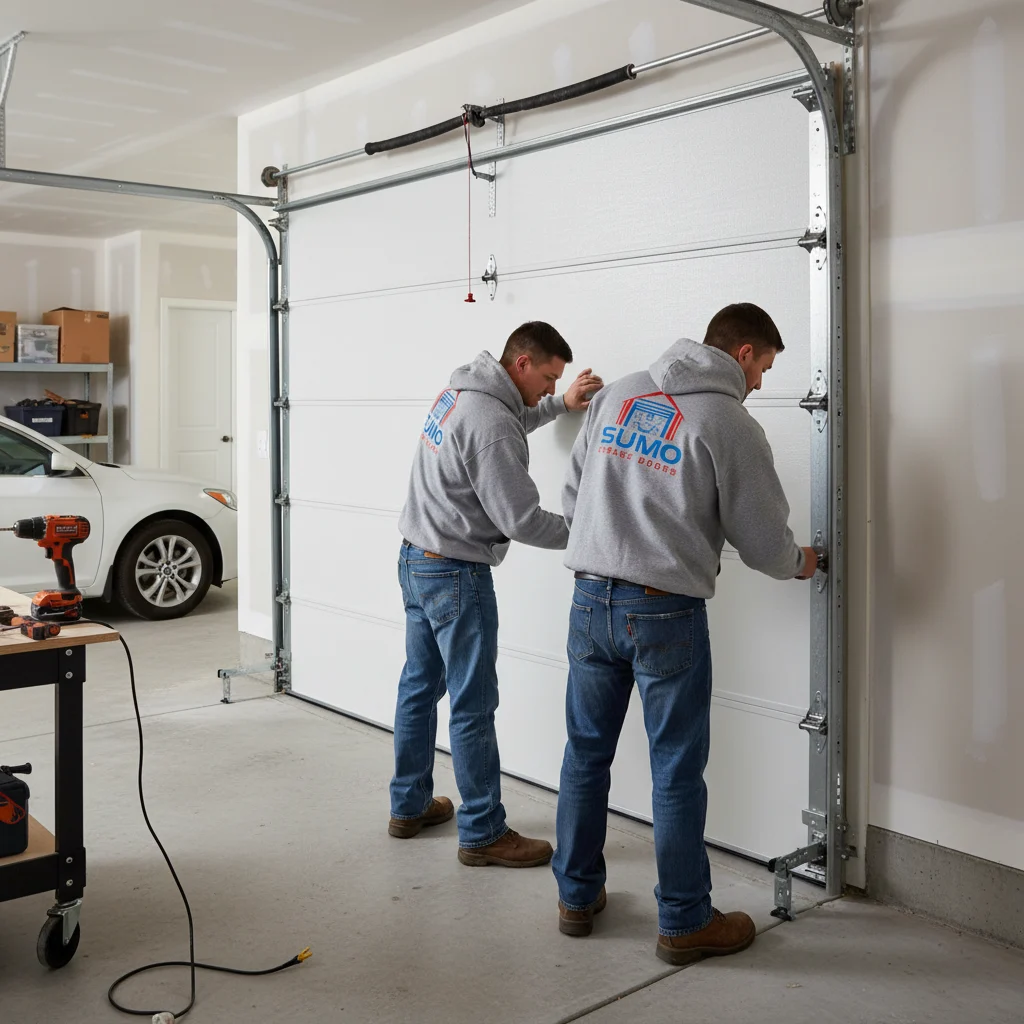
Garage door installation prices can vary widely because the final cost depends on much more than the door itself. Size, material, insulation, design, opener compatibility, removal of the old door, and the condition of the opening can all change what a homeowner pays.
For garage door installation cost in Long Island, a useful planning range is roughly $800 to $4,500 or more for a new residential garage door, depending on the type of door and installation requirements. Sumo Doors currently uses that range in its Long Island cost guidance, while broader 2026 replacement data also shows material and door type as major pricing drivers.
The best way to budget is to understand which parts of your project push the price toward the lower or higher end.
Garage Door Installation Cost in Long Island at a Glance
A basic single-car steel door with straightforward installation will usually cost much less than a double-width insulated door with windows, custom finishes, and opener upgrades.
A Simple Planning Range
| Project Type | General Cost Direction |
| Basic single-car steel door | Lower end |
| Insulated steel door | Moderate |
| Double garage door | Moderate to higher |
| Carriage-style door | Higher |
| Full-view glass or aluminum door | Higher |
| Custom wood door | Highest range |
| Door plus new opener | Adds to total |
| Structural or track modifications | Adds to labor |
Current 2026 national replacement data places many garage door projects between about $754 and $1,707 per door before premium materials, larger sizes, and added work push the total higher. New York City replacement data is also higher than the national average in many cases.
Long Island homeowners should therefore treat national averages as a baseline rather than a guaranteed local price.
Door Size Is One of the Biggest Cost Factors
A wider door requires more material and heavier components.
Single-Car Garage Doors
A standard single-car opening is usually the least expensive setup because the door uses less material and may require a lighter spring system.
Common widths include:
- 8 feet
- 9 feet
- 10 feet
Double Garage Doors
A double-width door can cost more because it requires:
- Larger panels
- Heavier springs
- Longer tracks
- Stronger supporting components
- More labor during installation
A 16-foot-wide door therefore should not be priced the same way as a basic 8-foot opening.
Material Choice Can Change the Price Substantially
Garage doors are available in several materials, and each comes with a different combination of appearance, durability, weight, and maintenance.
Steel
Steel is one of the most common residential choices.
It can offer:
- Low maintenance
- Good durability
- Several insulation levels
- Many panel styles
- Wide color selection
Basic steel tends to stay toward the lower and middle price range.
Wood
Wood provides a different look but can move the project into a higher price category.
Cost can increase because of:
- Material price
- Weight
- Custom fabrication
- Finishing
- Maintenance needs
Wood doors are often chosen for appearance rather than lowest cost.
Aluminum
Aluminum is lightweight and resistant to rust.
It is commonly used in modern-style doors and can be paired with glass panels.
Fiberglass
Fiberglass can imitate wood grain while requiring less maintenance than natural wood.
Glass
Full-view glass garage doors are often among the more expensive design options because of the frame system, glass configuration, and modern appearance.
Sumo Doors currently works with steel, wood, aluminum, fiberglass, and glass garage door options across Long Island.
Insulation Adds Cost but Can Change How the Garage Performs
Insulated doors cost more than basic single-layer doors because they contain additional material.
Common constructions include:
- Single-layer steel
- Steel plus insulation
- Multi-layer steel with insulation between panels
When Insulation Makes More Sense
Consider an insulated door if:
- The garage is attached to the house.
- There is living space above it.
- The garage is used as a workshop.
- Temperature control matters.
- You want a quieter, more rigid door.
Long Island experiences both cold winters and hot summers, so insulation can be useful for attached garages.
A detached garage used only for storage may not need the same insulation level.
Also Read:
Garage Door Style Also Affects the Budget
Two doors made from the same material can have very different prices because of design.
Traditional Raised-Panel Doors
These are generally among the more budget-friendly choices.
Carriage-Style Doors
Carriage-style doors can include decorative handles, overlays, windows, and panel detailing that increase the price.
Modern Doors
Modern designs may use:
- Flush panels
- Aluminum frames
- Large glass sections
- Dark finishes
- Custom layouts
New York-area cost data currently lists carriage-style doors around the higher end of common replacement pricing, while standard sectional steel is generally more affordable.
The final style should therefore be chosen alongside the budget rather than after a basic door estimate has already been set.
Windows Can Increase Garage Door Installation Cost
Adding windows changes both appearance and price.
Cost depends on:
- Number of windows
- Glass type
- Decorative inserts
- Insulation
- Window placement
Glass Options May Include
- Clear
- Frosted
- Tinted
- Decorative
- Insulated
Windows can improve natural light inside the garage and change the home’s curb appeal, but they should be included in the estimate from the beginning.
A New Opener Can Add to the Total Installation Price
A new garage door does not always require a new opener.
If the existing opener is compatible, in good condition, and properly sized for the new door, it may be possible to keep it.
A New Opener Makes More Sense When
- The old opener is failing.
- The motor is undersized.
- The system is very old.
- Safety sensors are unreliable.
- You want smart/Wi-Fi features.
- The new door is significantly heavier.
Garage door opener work should therefore be quoted separately from the door itself so you can see what is actually driving the project price.
Removing the Old Garage Door Can Add Labor
Replacement installations often involve more than fitting the new door.
The existing system may need to be dismantled first.
That can include removing:
- Old panels
- Tracks
- Springs
- Cables
- Hardware
- Weather seals
Angi’s 2026 garage door replacement guidance specifically lists old-door removal among the expenses homeowners should include in the project budget.
Ask whether removal and disposal are included in the quote.
Existing Tracks May or May Not Be Reusable
Keeping old tracks sounds like a good way to save money, but they need to be compatible with the new door.
Track geometry, door thickness, rollers, springs, and manufacturer specifications can differ.
New Tracks May Be Needed When
- Existing tracks are bent.
- The new door uses different hardware.
- The opening size changes.
- Track spacing is incorrect.
- Corrosion is present.
- The manufacturer requires its own track system.
Trying to force a new door onto incompatible old hardware can create alignment and safety problems.
The Spring System Affects Installation Complexity
Garage doors are heavy, and springs counterbalance that weight.
Common systems include:
Torsion Springs
Torsion springs are typically mounted above the door and rotate around a shaft as the door operates.
Extension Springs
Extension springs stretch along the horizontal tracks on some residential systems.
A new door may require different spring sizing because of changes in:
- Weight
- Width
- Material
- Insulation
- Glass
Spring work should be handled by trained technicians because the components operate under high tension.
Installation Complexity Can Push the Price Higher
A straightforward replacement within an existing standard opening is usually easier to price.
The project becomes more expensive when modifications are required.
Extra Labor May Be Needed For
- Uneven framing
- Damaged jambs
- Low headroom
- Unusual ceiling height
- Custom track configurations
- Structural repairs
- Nonstandard openings
- High-lift tracks
- Specialty hardware
Sumo Doors itself identifies installation complexity as one of the main reasons garage door installation pricing varies.
A site inspection is therefore more useful than trying to estimate everything from door width alone.
Headroom Can Affect the Track Setup
Garage doors need enough room above and beside the opening for tracks, springs, and hardware.
Some garages have:
- Low ceilings
- Beams
- Pipes
- Storage systems
- HVAC ducts
These conditions can require a different track arrangement.
A low-headroom kit or other specialty setup can add equipment and labor to the job.
Custom Garage Doors Cost More Than Standard Sizes
Standard sizes are easier to source and manufacture.
A custom opening may require:
- Made-to-order panels
- Special tracks
- Custom framing
- Longer lead times
- Nonstandard glass
- Specialty finishes
That can push garage door installation cost in Long Island toward the upper end of the range.
Measure the rough opening before shopping so you know whether a standard size is possible.
Commercial Garage Doors Follow a Different Pricing Structure
Commercial installations can differ significantly from residential doors.
Warehouses, retail stores, storage facilities, and service buildings may use:
- Roll-up doors
- Sectional steel doors
- High-cycle systems
- Heavy-duty openers
- Commercial safety devices
The door size and cycle requirements may be much greater than a residential garage.
Sumo Doors provides commercial installation for retail, storage, and warehouse applications across Long Island, which means commercial projects should be quoted separately from residential pricing.
Garage Door Permits and Local Requirements Can Affect Cost
Permit requirements can vary depending on the municipality and project scope.
Long Island includes many towns, villages, and local jurisdictions, so homeowners should confirm whether their particular project requires:
- Building permit
- Structural approval
- Wind-load documentation
- Other local filing
Permit fees and structural repairs can add to garage door replacement cost, according to current 2026 national cost guidance.
Your installer should know whether additional approval is likely based on the location and project.
Garage Door Replacement vs Repair Can Change the Budget Decision
Not every failing garage door needs full replacement.
A door may still be repairable when the main problem involves:
- Springs
- Cables
- Rollers
- Hinges
- Tracks
- Opener
Replacement Makes More Sense When
- Several panels are damaged.
- The door is badly corroded.
- The frame is failing.
- Repairs keep repeating.
- The door has major structural damage.
- You want better insulation.
- The current design no longer fits the home.
Comparing repair cost against replacement value can help prevent spending repeatedly on a door that is already near the end of its useful life.
How Long Does Garage Door Installation Take?
Most residential replacement projects can often be completed within half a day to a full day when the opening is straightforward, and materials are ready.
Sumo Doors currently gives that same general half-day to full-day range for a typical door-and-opener installation, depending on removal and installation complexity.
Installation Can Take Longer When
- Structural framing needs repair.
- Custom tracks are needed.
- Several doors are being installed.
- Commercial systems are involved.
- Electrical work is required.
- The opening is nonstandard.
The installer should identify these issues during the estimate.
How to Compare Garage Door Installation Quotes
A useful quote should show more than one total number.
Ask Whether the Estimate Includes
- Garage door
- Tracks
- Springs
- Rollers
- Hinges and hardware
- Weather seal
- Labor
- Old door removal
- Disposal
- Opener work
- Electrical work
- Permit fees
- Structural repairs
- Warranty details
A quote that appears lower may simply exclude work another company already included.
Do Not Buy the Door Before the Opening Is Checked
Ordering the door first can create expensive mistakes.
The installer should confirm:
- Width
- Height
- Headroom
- Side room
- Backroom
- Track configuration
- Opener compatibility
- Structural condition
A measurement error on a custom garage door can be difficult to correct after manufacturing.
Plan for Cost Based on the Whole Garage Door System
A useful budget for garage door installation cost in Long Island is roughly $800 to $4,500 or more, but size, material, insulation, glass, opener work, removal, custom hardware, and structural conditions can move the final price well outside a basic average. The most accurate estimate comes from evaluating the existing opening and specifying the actual door rather than pricing by square footage alone.
Sumo Garage Doors installs residential and commercial garage doors across Long Island, including Nassau and Suffolk County communities, with traditional, carriage-style, modern glass, insulated steel, and custom door options. If you are planning a new installation or replacement, request a written garage door installation estimate from Sumo Garage Doors so the door, materials, installation requirements, and any additional work can be priced for your specific property.

