
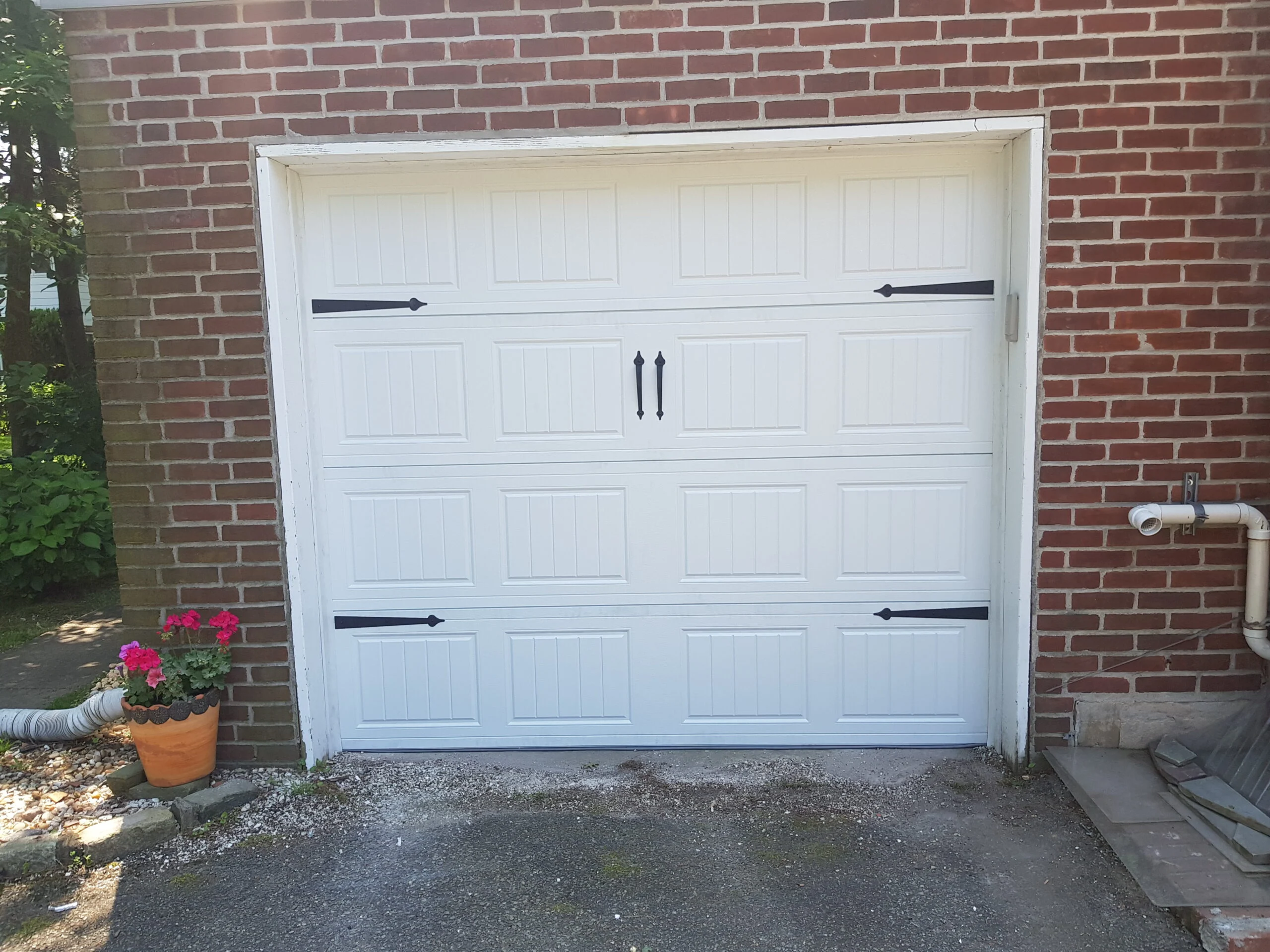
You are replacing a worn-out garage door or planning a new build, and one simple question stops you first. What size do you actually need? The most common single-car door measures 9 feet wide by 7 feet tall, while the standard double-car door runs 16 feet wide by 7 feet tall. Those two sizes cover most homes on Long Island and beyond.
The right fit for your home depends on your vehicles, your garage opening, and how you use the space. Knowing the standard garage door sizes makes the rest of the choice straightforward, since most garage doors come in a handful of predictable dimensions with custom options for everything else. Get the standard sizes and a few quick measurements right, and the door that fits becomes obvious.
Quick Answer:
The standard single-car garage door is 8 to 10 feet wide and 7 feet tall, and the standard double-car door is 16 feet wide and 7 feet tall. Taller 8-foot doors and custom sizes handle trucks, SUVs, and RVs.
Standard Garage Door Sizes at a Glance
Most residential doors fall into a few standard garage door sizes, always listed as width by height. The table below covers the common options and who each one suits.
| Door type | Width | Height | Best for |
| Single-car | 8 to 10 ft | 7 ft | One car, SUV, or small truck |
| Double-car | 12 to 18 ft (16 ft most common) | 7 ft | Two vehicles side by side |
| Three-car | A double plus a single, or two doubles | 7 to 8 ft | Three vehicles or a workshop bay |
| RV or oversized | 10 to 16 ft | 8 to 14 ft | RVs, boats, large trucks, often custom |
Width is always stated first, then height, which is how every manufacturer and installer lists a door. Start with the category that matches your garage, then fine-tune the exact numbers to your vehicles.
Single-Car Garage Door Sizes
Single-car doors fit one vehicle and come in three standard widths, almost always at a 7-foot height. These are the doors you see on narrow lots, older homes, and any garage built one bay at a time.
Why a Single-Car Door Makes Sense
One door per bay gives you control that a wide door cannot. You can open one side while the other stays shut, which keeps heat in and weather out. Many older Long Island homes were framed for a single 8-foot opening, and a matched pair of singles often suits a carriage-house look better than one wide door.
Standard Single-Car Widths
- 8 feet wide: Fits a compact car or a tight garage opening on a narrow driveway.
- 9 feet wide: The most common single-car size, with room for a sedan, SUV, or mid-size truck.
- 10 feet wide: Extra width for a full-size truck, a workshop bay, or easier parking with mirrors out.
Design and Material Choices
A single door shows its panel detail up close, which makes the style choice matter. Traditional raised panels suit most homes, carriage designs add classic charm, and modern glass or flush panels fit a contemporary front. Steel is the low-maintenance workhorse, wood brings warmth, and aluminum resists coastal rust. Height holds at 7 feet for most cars, while an 8-foot door clears a taller SUV or van.
What to do: Measure the opening width, pick a door that leaves a few inches of margin past your widest vehicle, and step up to an 8-foot height if you park anything tall.
Double-Car Garage Door Sizes
Double-car doors are one wide panel that spans the whole opening, not two single doors placed side by side. Widths run from 12 to 18 feet, with 16 feet as the modern standard.
Best Fit for Two-Vehicle Homes
A double door is the simplest way to park two cars under one opening. One panel costs less to install than two separate doors, operates on a single opener, and gives a clean, uninterrupted front. The trade-off is a wide span with no center post, which puts more weight on the spring system and the header above.
Standard Double-Car Widths
- 12 to 14 feet wide: Older or compact two-car garages, often tight once both cars are in.
- 16 feet wide: The default for most two-vehicle households, with comfortable room to open car doors.
- 18 feet wide: Wider garages, or homes with full-size trucks and SUVs that need the extra clearance.
Span, Support, and Insulation
A wide door needs a properly sized torsion spring and a solid header, which is where a professional install matters most. Insulation counts for more on a double, since the larger surface loses more heat, and an insulated steel door keeps an attached garage far more comfortable. Window inserts and carriage hardware dress up the broad face, while a flush modern panel keeps it understated. If you would rather have two separate 8- or 9-foot doors instead of one 16-foot panel, that works too, and it lets one bay stay closed while the other opens.
What to do: Measure the full opening, size the door to both vehicles plus room for mirrors and open car doors, and consider an 8-foot height if either vehicle is an SUV or truck.
Three-Car and Multi-Bay Sizes
Larger homes often need more than two bays, handled either as a double door paired with a single, or as two double doors. The combined openings give you room for three vehicles, or two cars plus a workshop and storage bay.
When a Third Bay Is Worth It
A third bay pays off when you have more vehicles than two, a trailer or boat to store, or a hobby space you want to keep separate from the cars. Keeping one bay as a workshop also spares your daily drivers from dust and tools.
Common Three-Car Layouts
- One 16-foot double plus one 9-foot single: The most common mix, with two cars under the wide door and a third bay on its own.
- Two 9-foot singles plus one wider bay: More separation, with each space closing on its own.
- Two 16-foot doubles: Full four-car capacity for large homes or enthusiasts.
Match the panel style, color, and window layout across every door, since mismatched bays stand out from the curb. A consistent look keeps a wide, multi-door front from feeling busy.
What to do: Decide how you will use each bay first, then size the doors around that plan rather than splitting the width evenly out of habit.
Oversized, RV, and Custom Sizes
Bigger vehicles need bigger doors, and the stock sizes do not always reach. RV and oversized doors run 10 to 16 feet wide and 8 to 14 feet tall, enough for a motorhome, a boat on a trailer, or a commercial van.
Who Needs an Oversized Door
Owners of an RV, a lifted truck, a box van, or a garage with a car lift all run out of room behind a standard 7-foot door. The extra height is usually the deciding factor, since width is easier to find in stock sizes than a door tall enough for a motorhome.
Clearance and Build Details
Tall, wide doors demand more of the space around the opening. Headroom above the door grows with height, the backroom needs to be deep enough for a longer track, and the spring system has to carry real weight. Insulation and corrosion-resistant hardware matter more here too, given the size of the surface and Long Island’s coastal air.
How to Order the Right One
Older Long Island homes also carry odd openings that no stock size fits, which is where a custom door earns its place. Sumo builds custom garage door sizes to match any opening, which means a nonstandard frame never forces a compromise.
What to do: Book an on-site measurement for anything outside the standard range, since oversized and custom doors leave no room for a guess.
Standard Garage Door Height
Width gets most of the attention, though height matters just as much for taller vehicles. The standard residential height is 7 feet, which clears almost every car and most SUVs. Step up to an 8-foot door when you park a lifted truck, a cargo van, or a vehicle with a roof rack, or when you plan to add a car lift inside.
Good to Know:
Taller doors need more headroom above the opening for the track and opener. Most 7-foot doors need about 10 to 12 inches of headroom, and an 8-foot door or certain spring systems need more.
Also Read:
What Size Do You Need by Vehicle and Use?
Not sure which size to pick? Match your vehicle and how you use the garage to the table below.
| Vehicle or use | Recommended door |
| Compact car or sedan | 8 or 9 ft wide, 7 ft tall |
| SUV or crossover | 9 or 10 ft wide, 7 to 8 ft tall |
| Full-size or lifted truck | 10 ft wide, 8 ft tall |
| Two vehicles | 16 ft wide, 7 ft tall |
| Workshop or extra storage | 10 ft or wider for easy access |
| RV or boat | 12 ft or wider, 10 to 14 ft tall, usually custom |
When your needs fall between two options, size up rather than down. For a deeper look at style and material alongside size, see our guide on how to choose the right garage door.
How to Measure Your Garage Door Opening
Before you order, measure the finished opening rather than the old door, because the door is sized to the opening it covers. Five measurements tell the installer everything:
- Width: Across the opening at its widest point, left to right.
- Height: From the floor to the top of the finished opening.
- Headroom: The space above the opening up to the ceiling, for the track and opener.
- Side room: The space on each side of the opening, for the vertical tracks.
- Backroom: The depth from the opening back into the garage, so the door can roll open.
Write each number in inches and hand it to your installer. On-site measurement catches the details a rough guess misses, and it avoids a door that does not fit the frame.
Pro Tip:
Standard headroom runs about 10 to 12 inches, and standard side room about 3.75 inches per side. Tight on space? Low-headroom track kits let most doors fit where clearance is limited.
Garage Door Sizes for Long Island Homes
Long Island mixes newer construction with older houses, and the openings vary just as much. Many mid-century Nassau and Suffolk homes were framed for a 7-foot single door, while newer builds lean toward 8-foot heights and wider double openings. Coastal exposure shapes the choice too, since a properly sized, well-sealed door keeps salt air and weather out of the garage. Sumo measures every opening on site and matches it to the right standard or custom size for the home.
Smart Tips for Choosing the Right Size
A few habits make the sizing decision easier:
- Measure the opening, not the door, since the two are not the same.
- Plan for your biggest vehicle, not just your current one, if an upgrade is likely.
- Add height for roof racks or a lift with an 8-foot door.
- Ask about custom sizes for any opening the standard doors miss.
Nail these down before you shop, and you avoid the most common sizing mistake, ordering a door the frame cannot take.
Frequently Asked Questions
What is the most common garage door size?
The most common single-car door is 9 feet wide by 7 feet tall, and the most common double-car door is 16 feet wide by 7 feet tall. These two sizes cover the majority of homes.
What is the standard garage door height?
Standard residential height is 7 feet, with 8 feet as a common upgrade for taller vehicles. Commercial and RV doors often run higher.
Can I get a custom garage door size?
Yes. Custom doors are built to fit nonstandard openings, which is common in older homes and for RV or oversized garages. A custom size means the door matches the frame instead of the other way around.
How do I measure for a new garage door?
Measure the finished opening width and height, then the headroom, side room, and backroom. Share all five numbers in inches with your installer for an accurate fit.
Is one wide door or two single doors better for a two-car garage?
One wide door is cheaper to install and easier to use, while two single doors add a center support and let one bay stay closed. Your framing and style preference decide which works better.
Does a bigger garage door cost more?
Larger doors use more material and heavier hardware, which usually makes them cost more than a standard single. Custom and oversized sizes add the most to the price.
The Right Size Starts With a Measurement
Most homes settle on a familiar size, a 9-by-7 single or a 16-by-7 double, though the only way to be sure is to measure the opening and match it to your vehicles. Get the width, height, and clearances right, and the door fits the first time with no costly reorder.
Sumo Garage Doors measures, sizes, and installs doors across Nassau, Suffolk, and Queens, in every standard size plus custom builds for the openings that need them. Licensed, insured, and backed by a workmanship warranty, our team handles the fit from the first measurement to the final test. Call (833) 456-7866 or request a free quote, and get a door sized right for your home.

