
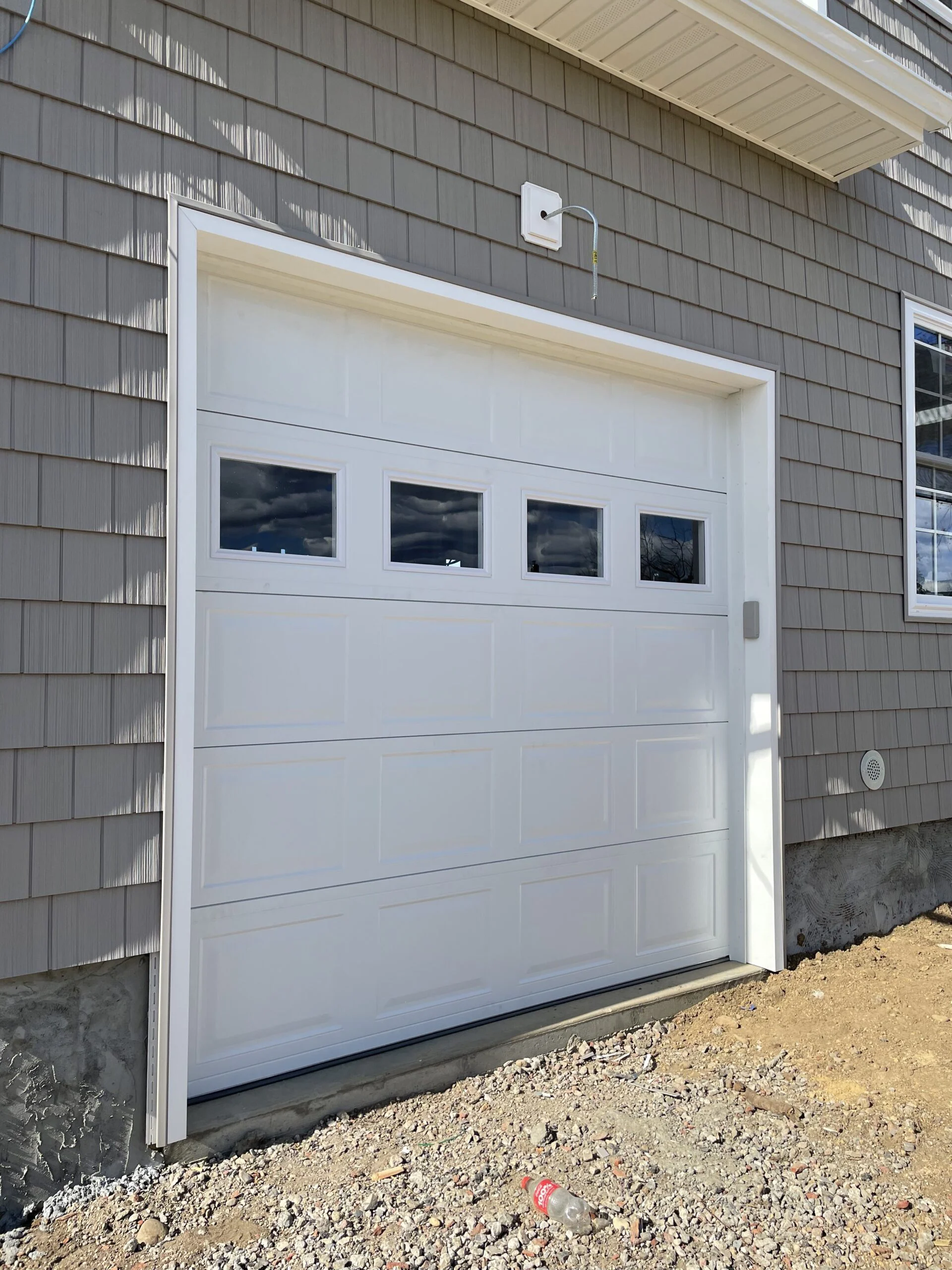
Few home upgrades pull their weight like a new garage door, which the latest Cost vs. Value report puts at a 268% return at resale. That makes the choice in front of you worth getting right. Whether you are building a garage, replacing a tired door, or planning a two-car bay, the single vs double garage door question drives your budget, your curb appeal, and how the space works every day. The answer is not one size for everyone. It depends on your garage, your driveway, and how you live. Looking at these factors side by side can help you choose the door that fits your garage and daily needs.
What Is a Single Garage Door?
A single garage door covers a one-car opening with one panel system, one set of springs, one track, and one opener. It is the simplest configuration on the market, and the most common on smaller homes. Beyond one-car garages, single doors also show up in tandem garages, where cars park one behind the other, and on some two-car garages built with two separate openings.
Common Single Door Sizes
Most single doors run 8 to 9 feet wide and 7 to 8 feet tall, with 8 feet the classic width and 9 feet the roomier choice. That extra foot makes a real difference for parking, especially with a wider vehicle. Taller 8-foot doors suit lifted trucks, roof racks, and tall SUVs that a standard 7-foot opening cuts close.
What Is a Double Garage Door?
A double garage door spans a two-car opening as one wide panel, typically 16 feet across and 7 feet tall, with 18-foot versions for extra-wide bays. One door, one track, and one opener cover the whole span. That single wide opening is the defining trait, letting two cars share one clear entrance with no post in the middle. For most standard two-car garages, it is the default and the most economical way to close the gap.
Key Points Before You Compare
Two different questions hide inside this comparison, and separating them clears up most of the confusion:
- Sizing a garage: a single one-car door against a double two-car door
- Filling a two-car garage: two single doors against one double door
- Either path can suit a home, and the right call depends on the garage, not a rule
- Switching between them later means structural work, so it is worth deciding up front
Neither option is the lesser choice on its own. Each fits a different garage, budget, and street. The single vs double garage door decision comes down to matching the door to how you actually live.
Single vs Double Garage Door Compared on Every Factor
Here is how a one-car single door stacks up against a two-car double door, with a clear call on each point.
Size and Vehicle Fit
A single door handles one vehicle cleanly, and a 9-foot width gives comfortable room for a truck or SUV. A double door fits two vehicles side by side under one opening, along with the extra width for boats, trailers, and wide modern trucks. Only one of them solves parking for a two-car household.
Clear Edge: The double door, for anyone keeping more than one vehicle.
Upfront and Long-Term Cost
Cost splits cleanly by size, and the two lines look like this:
- Single door: the lower upfront price, with one door, one opener, and one set of springs to buy and install.
- Double door: more than a single, though one door and one opener still cover two full car spaces.
The real figure depends on the material, insulation, and opener you choose.
On price the single takes it, yet the double hands you more opening for every dollar.
Space and Driveway Room
Two things decide this one, and both favor the smaller door on a tight lot:
- Single door needs less driveway apron to approach and turn into
- Single opening frames into a narrower, shorter garage wall
Where space is tight, the single door wins, often as the only door that fits.
Curb Appeal and Resale Value
The garage door can fill a third of a home’s front view, so its look carries real weight. A clean double door reads modern and bold, while single doors can lend a more traditional face. Both lift resale strongly, which is why a new door tops the return charts year after year.
Worth Knowing
A garage door replacement recoups more at resale than almost any other home project, and a fresh door can lift a home’s list price by one to four percent. Whichever size you pick, an upgrade rarely fails to pay off.
Call this one a draw, since the better look depends on the house rather than the size.
Maintenance and Repairs
Upkeep comes down to how much hardware each door carries:
- A single door has one set of springs, cables, rollers, and one opener to service
- A double door is heavier, needs a stronger opener, and puts more load on its springs
- Either way, it is still a single door to inspect and tune once a year
Fewer parts hand this to the single door.
Energy Efficiency
A single door opens a smaller gap, which lets less heated or cooled air escape each time it lifts. While a double door trades more air with the outside through its wider opening, a real factor for an attached garage, where the Department of Energy urges sealing and insulating the shared walls between the garage and living space.
For holding a steady temperature, the single door leads.
Single vs Double Garage Door at a Glance
The single vs double garage door trade-offs line up clearly side by side.
| Factor | Single Door | Double Door |
| Opening | One car | Two cars, side by side |
| Typical size | 8 to 9 ft wide | 16 ft wide |
| Cost | Lower | Higher, but covers two cars |
| Space needed | Less driveway and wall | Wider apron and garage |
| Energy loss | Smaller opening | Wider opening |
| Maintenance | One set of hardware | Heavier, needs a stronger opener |
| Best for | Small lots and one-car homes | Two-car garages |
The pattern becomes clear when you compare cost, available space, and daily use. Single doors suit compact layouts and lower costs, while double doors offer the width and access needed for two vehicles.
Two Single Doors vs One Double Door
Here is the option promised at the top. For a two-car garage, you can install one wide double door or two separate single doors with a support post between them. This is the choice most guides skip, and it changes cost, looks, and daily use.
The Cost of Two Doors
Two singles cost more than one double, usually 15 to 30% more. You pay for two doors, two openers, two sets of springs and tracks, and the framing for a center post. Nothing about the math favors the split here.
On cost, one double door wins outright.
Flexibility and Redundancy
Independence is where two doors earn their price:
- One door can break while the other keeps working
- One car leaves while the second bay stays shut and secure
- A single spring or opener repair takes down only half the garage
Two singles take this, for backup and day-to-day independence.
Insulation and Weather
Opening one single door at a time keeps more heat in during a Long Island winter and less humidity in through summer. A double door exposes the full width every time it lifts, and the smaller panels of two singles tend to seal a touch better around the edges.
On holding temperature, two singles have the advantage.
Curb Appeal and Style
Two singles and one double each own a look:
- Two single doors: symmetrical and traditional, the craftsman face many buyers love.
- One double door: wide and clean, the better stage for full-view glass or flush modern panels.
No outright winner here, so let the style of the house settle it.
The Center Post and Clearance
Two singles need a structural post between them, which frames the openings but narrows the clear width. A double door gives one uninterrupted span, the better choice for a boat, a trailer, or backing in a wide truck. Converting from one setup to the other later means real framing work, and sometimes a permit.
Mind the Center Post
Adding a center post to split one opening into two, or removing one to make a single wide bay, is structural work that affects your header and framing. It is not a swap to make on a whim, which is why the two-car layout is worth settling before any door goes in.
For a two-car garage, the split usually comes down to budget against backup. When neither feels obvious for your own garage, that is exactly the call we help homeowners make before anything is ordered. We measure the opening, check the framing, and lay out both options with honest numbers and no pressure to upsize.
Also Read: Garage Door Sizes: Standard Dimensions and Buyer’s Guide
What Single and Double Garage Doors Share
Set the size aside, and the two have plenty in common:
- Both come in the same materials, from steel and aluminum to wood and composite
- Both offer insulated versions that cut noise and hold temperature
- Both pair with a modern opener for keypad, remote, and app access
- Both lift resale value and reshape the front of your home
The shared parts mean the size decision rarely limits your style or features. You can get the look and the insulation you want either way.
Garage Door Safety Applies Either Way
Whatever size you choose, a garage door is the largest moving object in most homes and can weigh a few hundred pounds. Federal rules have required an automatic reverse system on openers since 1993, which sends the door back up if it meets an object or a photo-eye beam. A double door’s weight makes correct spring balance and a strong opener matter even more.
Safety Check
Test the auto-reverse once a month. Lay a scrap board flat in the door’s path and close it. The door should touch the wood and reverse within a couple of seconds. If it does not, the opener needs attention before anyone uses it.
Which Garage Door Wins by Situation
The factor round stays close on paper. Your home makes the real call, and a few common cases each lean a clear way.
The One-Car Garage or Small Lot
A narrow plot or a single bay leaves little to debate. One single door fits the footprint, costs the least, and suits the scale of the house. Go with a single door, sized 9 feet wide for easier parking.
The Budget Two-Car Garage
For a standard two-car bay where cost leads, one wide door does the most for the least. Lower price, one opener, and simpler upkeep all point the same way. One double door is the smart money here.
The Family With Trucks or SUVs
Wide vehicles and daily in-and-out reward room to maneuver. A double door’s uninterrupted 16-foot span makes parking two large vehicles far easier, ideally in an 8-foot height for tall trucks.
The Boat Owner or Home Workshop
Anything wide or bulky needs maximum clear width without a post in the way. Boats, trailers, and large work equipment need an uninterrupted opening, making a wide single span more practical than two separate doors with a center post.
The Resale-Focused Seller
Selling soon means leaning on curb appeal and first impressions. Two single doors give a classic, symmetrical face on the right home, while a bold double suits a modern one. Match the door style to the house, and replace an aging door before you list.
The HOA or Design-Review Street
Some neighborhoods and review boards require two forward-facing single doors for a traditional streetscape. Where that rule applies, the decision is already made for you, so confirm the local requirements first.
Most Long Island homeowners land on a double for a standard two-car garage, though the exceptions above come up often enough to be worth a real conversation. Tell us your garage, your vehicles, and your street, and we point you either way with no upsell.
How to Choose in a Few Steps
Run the decision in order, and most garages settle quickly.
- Start with the opening: One car points to a single, two cars open up every option.
- Measure the space: A narrow lot or garage may only fit a single door.
- Set your budget: One double door is the most economical way to cover two cars.
- Weigh your vehicles: Boats, trailers, and wide trucks favor a single wide span.
- Check local rules: An HOA or review board may require two single doors.
We work through these on-site, measure the rough opening, read the framing, and match the door to your garage before a single panel is ordered.
Frequently Asked Questions
Is a single or double garage door cheaper?
A single door is cheaper to buy and install than a double, since it uses less material and one set of hardware. For a two-car garage, though, one double door costs less than two single doors combined. The most economical way to cover two cars is a single wide door.
What is the standard size of a single and double garage door?
Single doors usually run 8 to 9 feet wide and 7 to 8 feet tall, with 9 feet the roomier width for larger vehicles. A standard double door is about 16 feet wide by 7 feet tall, with 18-foot versions available. Taller 8-foot doors suit lifted trucks and roof racks.
Are two single doors better than one double door?
It depends on what you value. Two singles give redundancy and better insulation, since one can work while the other is down, though they cost more and need a center post. One double door is cheaper and offers a wider clear opening for big vehicles.
Do double garage doors lose more heat?
Yes, a double door opens a wider gap, which trades more air with the outside each time it lifts. That matters most for an attached or heated garage. Opening one of two single doors, or choosing an insulated door, helps hold the temperature.
Can I convert a double garage door into two single doors?
Converting is possible, though it means real structural work to add a center post between the two openings, along with new framing and sometimes a permit. The reverse, removing a post to make one wide opening, is similar. Both are best planned before installation rather than changed later.
Which garage door adds more resale value?
Both add strong value, and a new garage door consistently ranks among the highest-return home projects. The better style for resale depends on the house, with symmetrical single doors suiting traditional homes and a bold double suiting modern ones. Condition and curb appeal matter more than the size itself.
Getting the Right Garage Door for Your Home
No single answer wins every driveway, and that is the point of weighing them side by side. A single door takes cost, space, and efficiency. A double door takes fit and everyday ease for two vehicles. Two singles claim backup and insulation for a two-car garage, while one double claims the widest, most affordable opening. The single vs double garage door choice really follows your garage, your vehicles, and your street.
Tell us your setup, and the right door follows. Sumo Garage Doors installs single and double doors across Long Island, works directly with you with no subcontractors, and gives a detailed written estimate before any work begins, with no hidden charges and no upsell. Call 833-456-7866 or request a quote, and we will match the right door to your home and fit it clean the first time.

